
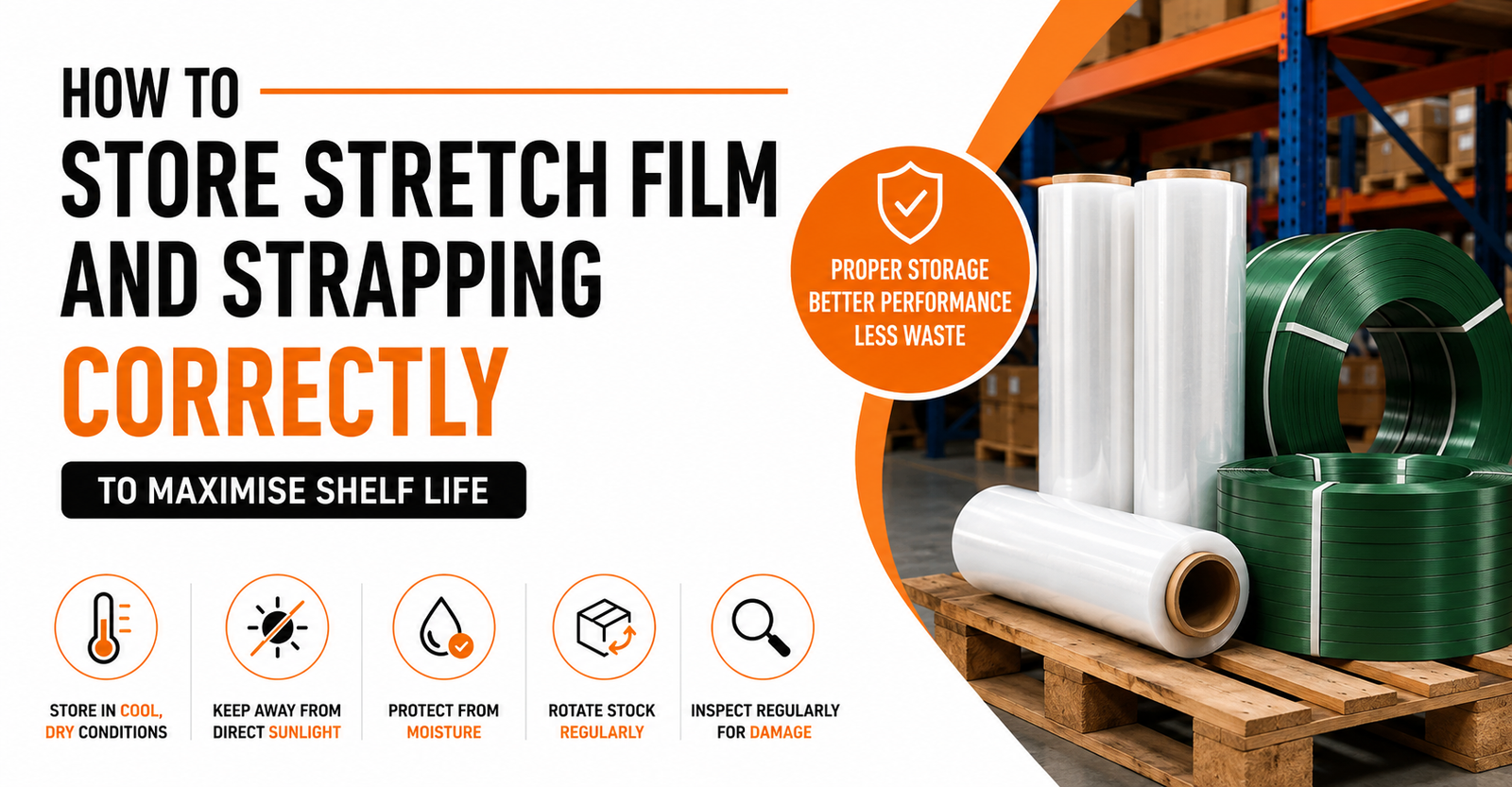
Most businesses spend good money on packaging materials and then store them wrong. A roll of stretch film left near a sunny roller door, or a coil of PP strapping sitting on a damp concrete floor, will not perform the way it should by the time you need it. That costs money twice over: once when you buy it, and again when it fails on the job.
This guide covers exactly how to store stretch film, PP strapping, PET strapping, and related packaging materials in a NZ warehouse environment so they hold their properties and last as long as possible.
Why Proper Storage of Packaging Materials Matters in New Zealand Warehouses
New Zealand warehouses deal with conditions that actively work against packaging materials. Coastal humidity in Auckland, wide temperature swings in inland regions, and the intense UV from New Zealand’s high sun intensity index all accelerate degradation. A roll of stretch film that might last 18 months in a controlled European warehouse can degrade noticeably faster if stored incorrectly here.
The problem is that most storage failures are invisible until the material is actually in use. Stretch film that has lost elasticity still looks fine on the roll. PP strapping that has absorbed moisture still feels intact. The first sign of a problem is often a snapped strap on a pallet mid-transit or stretch film that tears instead of wrapping cleanly.
Getting storage right means fewer surprises, less waste, and more reliable load security from every roll and coil you buy.
How to Store Stretch Film Correctly
Keep Stretch Film Away from Direct Sunlight and Heat Sources
UV exposure is the single biggest threat to stretch film shelf life. New Zealand’s UV radiation is among the highest in the world, and even indirect sunlight through a warehouse window or skylight will degrade the polyethylene structure over time. Store all stretch film rolls well away from windows, roller doors, and any area where sunlight reaches the floor or shelving during the day.
Heat accelerates the same degradation process. Keep stretch film away from radiators, hot water pipes, and any machinery that generates sustained heat. The ideal storage temperature sits between 10°C and 25°C. In summer, many New Zealand warehouses will regularly exceed 30°C near metal walls and rooflines. If your storage area does this routinely, relocate your film stock to a cooler internal zone.
Store Stretch Film Rolls Upright, Not on Their Side
Rolls stored on their side will deform under their own weight over time. The core collapses unevenly, the film profile changes, and you get inconsistent tension during application. Always store stretch film rolls standing upright on their cores, either on purpose-built vertical storage racks or on a flat pallet that keeps the bases off the floor.
If rolls must be stacked, use a maximum of two to three high depending on roll weight, and always ensure the cores are aligned vertically, not leaning.
Manage Humidity Around Stretch Film Storage
Stretch film is made from polyethylene, which does not absorb water. However, high humidity affects how the film clings to itself and to loads. In humid conditions, the tackiness that makes stretch film effective can reduce, and moisture sitting in the roll’s layers can cause partial bonding that makes the film difficult to unwind cleanly. Aim for a low-humidity storage zone and avoid storing film directly on concrete floors where moisture migrates upward.
Follow FIFO Stock Rotation for Stretch Film
Stretch film does not carry a printed expiry date, but its usable life is generally accepted as 12 to 18 months from manufacture. Older stock performs less predictably, particularly in terms of cling and elasticity. A simple first-in, first-out (FIFO) rotation ensures you are always using the oldest stock first rather than letting it sit behind newer deliveries.
Label incoming stock with the delivery date and rotate your storage racks or pallet positions accordingly.
How to Store PP Strapping Correctly
Keep PP Strapping Coils Dry and Off the Floor
Polypropylene strapping is moisture resistant but not impervious to its effects over time. More critically, PP strapping stored in damp conditions or directly on concrete will absorb surface moisture that can interfere with sealing performance, particularly for heat-sealed joins. Use pallets, racks, or raised storage platforms to keep coils off the floor.
Protect PP Strapping from UV Exposure
UV is particularly harmful to PP strapping. Polypropylene is a material that degrades relatively quickly under sustained UV exposure, becoming brittle and losing tensile strength. Even short periods of direct outdoor or sunlight exposure can initiate degradation that is not immediately visible but will show up as snapping under load. Store all PP strapping in a covered, shaded area well away from natural light sources.
Avoid Extreme Temperature Fluctuations with PP Strapping
PP strapping becomes brittle in cold temperatures and can soften and stretch excessively in heat. In New Zealand’s seasonal climate, warehouse temperatures can shift dramatically between summer and winter. Aim for stable storage conditions rather than exposing strapping coils to significant day to night or season to season temperature swings. If your dispatch area is outside or partially exposed, bring strapping to working temperature before use in cold conditions.
How to Store PET Strapping Correctly
PET strapping is more dimensionally stable than PP strapping and tolerates a wider range of conditions, but it is not immune to storage damage.
Keep PET Strapping Away from Moisture-Heavy Environments
Although PET strapping has excellent resistance to moisture, storage in wet or damp zones can cause surface oxidation on steel buckles and seals stored alongside it, and can affect the performance of heat-bonded joins. Keep PET strapping stored in a dry zone alongside its seals and tools.
Store PET Strapping Coils Flat or on Designated Racks
PET strapping coils are relatively dense and heavy. If stored incorrectly on their sides, or if other items are stacked on top of coils, the coil shape can distort, leading to feeding problems in strapping machines. Store coils flat on shelving or on vertical dispenser racks designed for the purpose.
PET Strapping Shelf Life and Inspection
PET strapping does not have a standard expiry date. Under correct storage conditions, it retains its tensile strength and elongation properties for several years. Inspect stored coils for visible signs of UV yellowing, brittleness at the strap edges, or surface crazing before use. These are signs the material has been compromised and should not be used on loaded pallets.
How to Store Pallet Wrap and Packaging Film in Auckland and Around New Zealand
General Rules for All Packaging Film Storage
All plastic packaging films, whether pallet wrap, hand roll stretch film, or machine film, share the same core storage requirements:
Temperature: Between 10°C and 25°C, away from heat sources and direct sun.
Humidity: Low, with good airflow and no direct contact with damp concrete.
Orientation: Upright on cores where possible; never laid flat with weight bearing on the roll surface.
Stock rotation: FIFO, with delivery dates recorded on each batch.
The Auckland Humidity Challenge
Auckland’s climate sits well above average humidity for most of the year. Warehouses close to the Waitemata Harbour or in industrial suburbs like East Tamaki, Penrose, and Wiri often experience condensation on floors and walls during seasonal humidity shifts. If your warehouse is in one of these areas, additional attention to elevated storage and airflow around packaging materials is worthwhile.
Signs Your Packaging Materials Have Been Stored Incorrectly
Before using any stored stretch film or strapping, a quick check can save a lot of grief:
Stretch film: Tears instead of stretching, feels tacky to the point of blocking on itself when unwound, shows visible discolouration or cloudiness, or the core has collapsed inward making unwinding uneven.
PP strapping: Cracks or snaps under light hand pressure, feels stiff and inflexible, or shows surface chalking or whitening which indicates UV breakdown.
PET strapping: Surface yellowing, visible edge crazing, or difficulty feeding through strapping machine guides due to coil deformation.
If any of these signs appear, do not use the material on loaded freight. The risk of in-transit failure is too high.
How Long Do Stretch Film and Strapping Last When Stored Correctly?
These are generally accepted shelf lives under correct NZ warehouse storage conditions:
| Material | Recommended Shelf Life |
| Stretch film (hand and machine roll) | 12 to 18 months from manufacture |
| PP strapping | 12 to 24 months (shorter near UV exposure) |
| PET strapping | 2 to 4 years under correct conditions |
| Steel strapping | Indefinite if stored dry; inspect for rust |
These figures assume indoor storage away from sunlight, within the temperature range above, and with FIFO rotation in place. Outdoor or partially exposed storage will reduce these figures significantly.
Where to Buy Quality Stretch Film and Strapping in New Zealand
Getting the storage right is one side of the equation. The other is starting with materials that are manufactured to a standard worth preserving.
CustomPack is an ISO-certified packaging supplies manufacturer and supplier serving businesses across New Zealand, with supply direct from Auckland. The product range covers stretch film, PET strapping, PP strapping, steel strapping, void fill, and custom packaging solutions built for the conditions New Zealand warehouses actually deal with. As a packaging manufacturer NZ businesses can rely on for consistent specifications, CustomPack is not a reseller adding a margin on imported stock; the products are quality-controlled at source before reaching your warehouse.
If you are sourcing packaging supplies NZ wide, buying material that holds its properties from manufacture through to end use is the first step. Storing it correctly after delivery is the second. Both matter equally.
Browse the full range at Custompack or contact the team directly for volume pricing on stretch film and strapping for your Auckland or nationwide operation.
Quick Storage Checklist for NZ Warehouse Managers
Before signing off, run through this list for your current packaging materials storage:
- Are stretch film rolls stored upright on cores, not lying flat?
- Is all packaging film and strapping stored well away from windows, skylights, and roller doors where UV enters?
- Is storage off the floor on pallets or raised racking?
- Do you record delivery dates and rotate stock on a FIFO basis?
- Is the storage area temperature controlled or shaded to prevent heat spikes above 25°C?
- Are PP strapping coils protected from any outdoor or seasonal UV exposure?
- Are PET strapping coils stored flat or on vertical dispenser racks without weight on top?
If you ticked yes to all of those, your packaging materials are in good shape. If not, the fixes above are straightforward and will make a meaningful difference to the performance of every roll and coil in your warehouse.
CustomPack is an ISO-certified packaging manufacturer and supplier based in Auckland, New Zealand. We supply stretch film, PET strapping, PP strapping, steel strapping, void fill, and custom packaging solutions to businesses across New Zealand.
Frequently Asked Questions
1. How long does stretch film last in storage in New Zealand?
Stretch film lasts 12 to 18 months when stored indoors at 10°C to 25°C, away from sunlight and humidity. Rotate stock using first-in, first-out to avoid using degraded rolls.
2. What is the best way to store PP strapping to prevent it from going brittle?
Keep PP strapping away from sunlight and UV exposure, which is the main cause of brittleness. In cold months, bring coils to room temperature before use as cold PP strapping snaps more easily under tension.
3. Does PET strapping expire or have a shelf life?
PET strapping has no printed expiry date and lasts two to four years under correct storage. Before use, check for yellowing, edge crazing, or tip brittleness. If any of these appear, replace the stock.
4. Can you store stretch film on its side or does it need to stand upright?
Always store stretch film upright on its core. Storing rolls on their side causes the core to deform under weight, which leads to uneven tension and tearing during application.
5. Where can I buy stretch film, PET strapping, and PP strapping in New Zealand?
CustomPack supplies stretch film, PET strapping, PP strapping, steel strapping, and void fill direct to businesses across New Zealand. ISO-certified, Auckland based, with nationwide delivery. Order at custompack.co.nz.