
Choosing the right stretch film is not just a packaging decision. It directly affects your cost, speed, and load safety. Many businesses get stuck between machine grade stretch film and hand grade stretch film. On the surface, both look similar. In reality, they serve very different purposes.
If you pick the wrong one, you either waste money or slow down your operations. This guide breaks it down in simple terms so you can choose what actually fits your workflow.
What is Stretch Film for Pallet Wrapping?
Stretch film is essential for keeping pallet loads secure during storage and transport. Without proper wrapping, products can shift, leading to damage and handling issues. Both hand grade stretch film and machine grade stretch film aim to stabilise loads efficiently.
Stretch film is a flexible plastic film used to wrap and secure goods on a pallet. It keeps items tight, stable, and protected during storage and transport.Whether you use hand grade stretch film or machine grade stretch film, the goal is the same:
- Prevent load shifting
- Reduce product damage
- Improve handling efficiency
The difference lies in how the film is applied and how it performs under pressure.
What is Hand Grade Stretch Film?
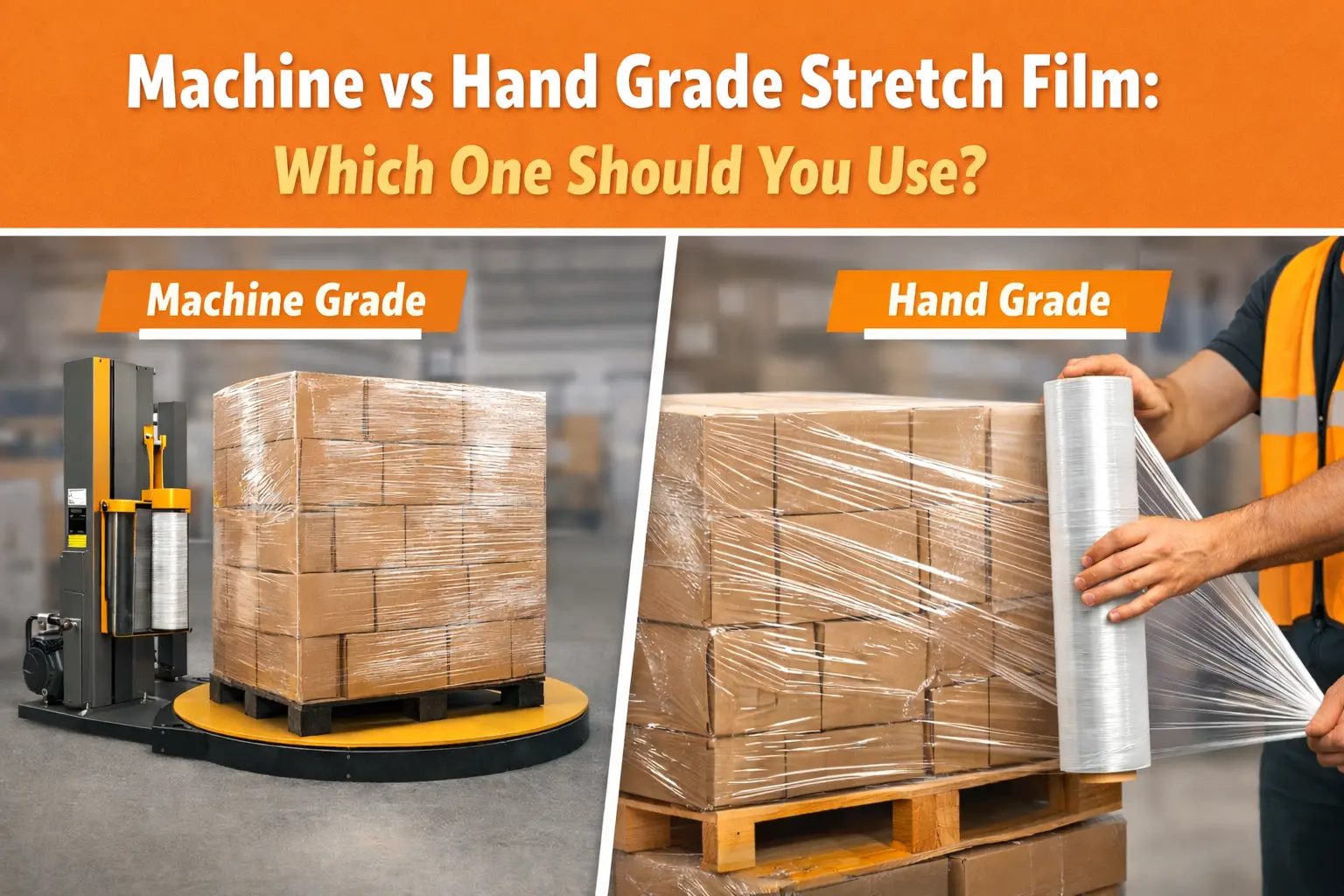
Hand grade stretch film is designed for manual wrapping in smaller or flexible operations. It works well when load sizes vary and machines are not practical. This makes it a common choice for warehouses with lower daily volume. Hand grade stretch film is designed for manual use. Workers wrap pallets by hand using a roll, often with a dispenser.
Best for:
- Small warehouses
- Low to medium volume packaging
- Irregular or mixed loads
Key benefits:
- Easy to use
- No machinery required
- Flexible for different load sizes
Limitations:
- Slower wrapping speed
- Inconsistent tension
- Higher film usage
If your team wraps a limited number of pallets daily, hand grade stretch film is practical and cost-effective.
What is Machine Grade Stretch Film?
Machine grade stretch film is built for automated wrapping and high-volume environments. It delivers consistent tension and faster results compared to manual methods. This makes it ideal for scaling operations. Machine grade stretch film is used with pallet wrapping machines. It is engineered for high-speed, consistent wrapping.
Best for:
- High-volume operations
- Distribution centres
- Export and industrial packaging
Key benefits:
- Consistent wrapping tension
- Faster packing speed
- Reduced film wastage
- Better load stability
Limitations:
- Requires investment in machinery
- Less flexible for irregular loads
For growing businesses, machine grade stretch film improves efficiency and reduces long-term cost.
Machine Grade Stretch Film vs Hand Grade Stretch Film: Key Differences
Understanding the difference helps you avoid wasted time and material. The impact shows up in speed, cost, and load safety. Choosing correctly improves both efficiency and output.
1. Speed and Efficiency
Speed becomes critical as pallet volume increases. Manual wrapping takes longer and depends on worker effort. Machine wrapping delivers faster and consistent results.
- Hand grade stretch film depends on manual labour. It takes more time and effort
- Machine grade stretch film wraps pallets quickly with uniform results
If speed matters, machine wrapping wins easily.
2. Film Usage and Cost
Film usage directly affects packaging cost over time. Manual wrapping often leads to excess use due to uneven tension. Machines apply the exact amount required.
- Manual wrapping often leads to overuse of film
- Machine wrapping applies exact tension and reduces waste
Over time, machine grade stretch film lowers packaging cost per pallet.
3. Load Stability
Stable loads reduce damage during transport. Uneven wrapping creates weak points that can shift under pressure. Machine wrapping maintains consistent tension throughout.
- Hand wrapping can create uneven tension
- Machine wrapping ensures consistent load containment
For heavy or valuable goods, machine grade stretch film offers better protection.
4. Labour and Productivity
Labour efficiency is a major factor in warehouse performance. Manual wrapping requires time and physical effort. Machines reduce workload and improve output.
- Hand wrapping requires physical effort and more manpower
- Machine wrapping reduces labour dependency
If your team is spending too much time wrapping pallets, it is a clear signal to upgrade.
5. Scalability
As operations grow, manual processes become slower and harder to manage. Automation supports higher output without increasing labour. This makes scaling smoother.
- Hand grade stretch film works for small-scale operations
- Machine grade stretch film supports growth and automation
As order volume increases, manual processes become a bottleneck.
When Should You Choose Hand Grade Stretch Film?
Manual wrapping still works well for smaller operations. It gives flexibility without requiring machines. This makes it ideal for businesses with lower daily volume.
Go with hand grade stretch film if:
- You wrap fewer pallets daily
- Your loads vary in size and shape
- You want a low upfront investment
- Your operation is still small or manual
It gives flexibility without needing machines.
When Should You Switch to Machine Grade Stretch Film?
As volume increases, efficiency becomes more important than flexibility. Manual wrapping starts slowing down operations. This is when switching makes sense. Switch to machine grade stretch film if:
- You handle high pallet volumes
- You want faster packing
- You need consistent load security
- You want to reduce film waste and labour cost
At this stage, efficiency matters more than flexibility.
Cost Comparison: What Actually Saves More?
Initial cost can be misleading if you ignore long-term usage. Manual wrapping may seem cheaper but often uses more film and time. Machine wrapping balances cost through efficiency.At first glance, hand grade stretch film looks cheaper. No machine cost, simple setup.
But here’s the catch:
- More film is used per pallet
- Labour time increases
- Wrapping quality varies
With machine grade stretch film, you:
- Use less film per load
- Wrap faster
- Reduce damage risks
Over time, machine wrapping often delivers better ROI. If you want to go deeper into reducing material waste and improving efficiency, check out our guide on stretch film strategies to cut your packaging costs.
Do You Need Both?
Many warehouses use both options depending on the situation. Each type solves a different problem. Combining both gives flexibility and efficiency.
In many warehouses, the answer is yes.
- Use machine grade stretch film for regular, high-volume loads
- Use hand grade stretch film for odd-sized or urgent pallets
This hybrid approach gives you both efficiency and flexibility.
Common Mistakes to Avoid
Even with the right film, small mistakes can lead to damage or extra cost. These issues usually come from poor application or wrong usage. Fixing them improves overall performance.
Even with the right film, mistakes can cost you.
- Using hand film for high-volume operations
- Over-wrapping pallets and wasting material
- Applying inconsistent tension
- Ignoring load type and weight
Choosing between machine grade stretch film vs hand grade stretch film is only the first step. How you use it matters just as much.
How to Choose the Right Stretch Film for Your Business
Choosing the right film depends on your daily operations. Volume, load type, and workflow all matter. Clear answers make the decision simple.
Ask yourself:
- How many pallets do you wrap daily?
- Is your process manual or automated?
- Are your loads standard or irregular?
- Are you trying to reduce cost or increase speed?
Your answers will clearly point toward either hand grade stretch film or machine grade stretch film.
Final Thoughts
There is no single right choice that fits every business. It really comes down to how your day-to-day operations run and where you’re heading next. When your stretch film matches your actual workflow, things just run smoother. You also avoid unnecessary cost and reduce the chances of load issues during transport.
Hand grade stretch film makes sense when you’re working with smaller volumes or mixed loads that need flexibility. Machine-grade stretch film is better when speed and consistency start to matter more, especially in high-volume setups where every minute and every wrap counts.