
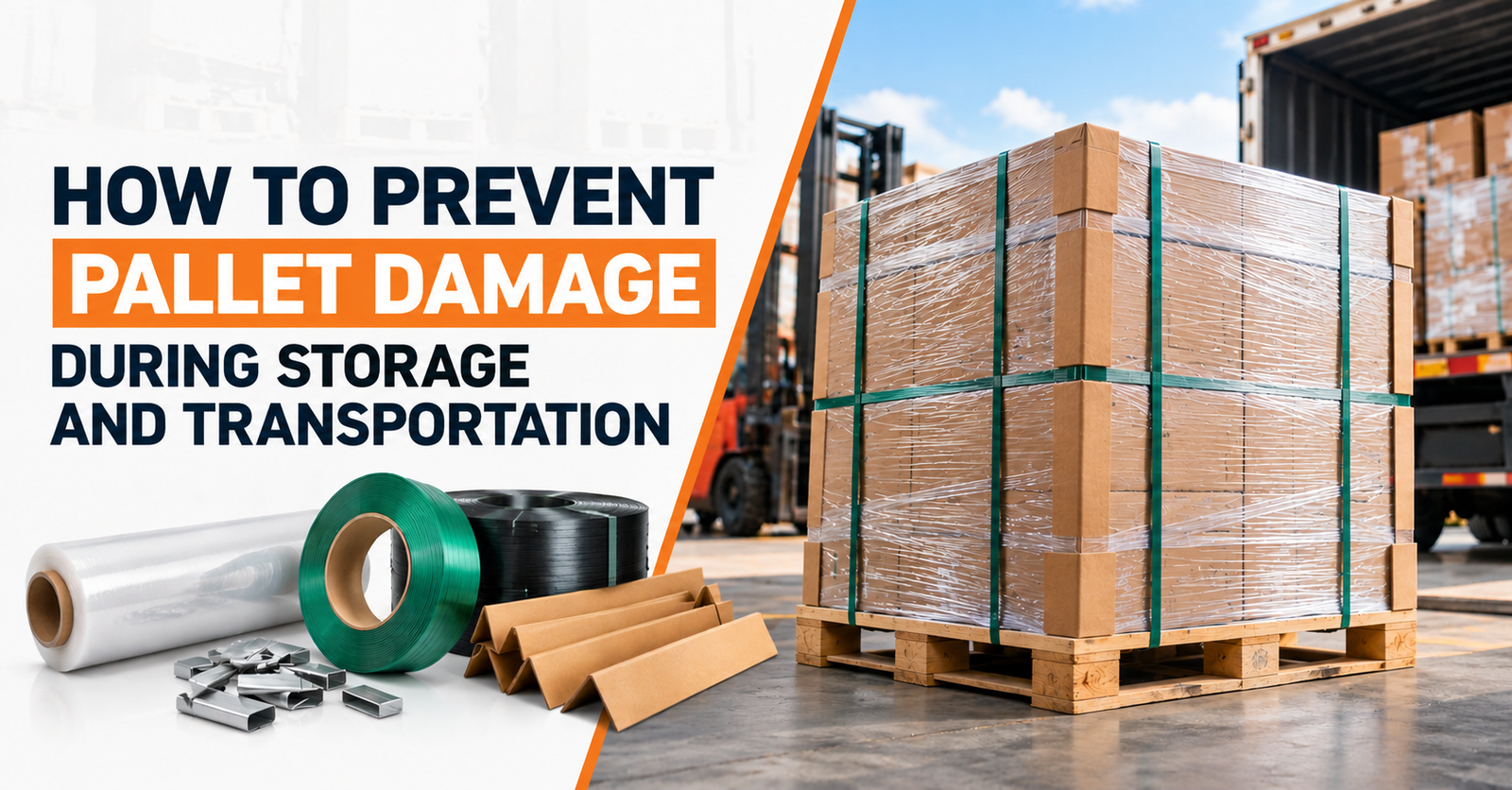
Damaged pallets mean rejected goods, replacement shipments, and unhappy customers. The damage usually starts before the pallet leaves your site, during packing, stacking and storage.
Pallet damage prevention comes down to four checks: a strong pallet, a stack built inside the pallet edges, wrap or strapping that suits the load, and protection for the edges where straps or forks press. Each check stops a different failure, so skipping one puts the load at risk.
This guide to pallet damage prevention covers those four checks (base, build, bind, and brace) and shows where CUSTOMPACK stretch film, PP strapping, PET strapping, and corner protectors fit for New Zealand warehouses, manufacturers, and exporters.
Where Pallet Damage Prevention Starts
Damage shows up at the delivery end, but the cause sits at the packing bench or in the rack:
- A weak base: broken bottom boards, loose nails, or a pallet smaller than the load.
- An unstable stack: heavy cartons above light ones, overhanging edges, and gaps that let product move.
- Loose containment: slack film, too few turns at the base, or strapping that cuts into carton corners.
- Rough handling: forks catching the bottom layer, and pallets double-stacked on cartons that cannot take the weight.
Pallet Load Stability Starts With the Base and the Stack
A stable pallet has a sound deck, cartons that sit fully on it, and layers that support each other.
- Inspect the pallet. Reject cracked or missing boards, and match the pallet size to the load.
- Put the heaviest items at the bottom. Crush-resistant product goes low and fragile cartons go on top.
- Keep every carton inside the pallet edges. Pallet overhang prevention matters because an overhanging carton loses the support underneath it and takes the knocks from forks, racking and neighboring pallets.
- Choose the stacking pattern on purpose. Column stacking lines carton corners up and keeps the best vertical strength. Interlocked stacking overlaps cartons like brickwork and gives better side-to-side stability. The right pick depends on carton strength and how far the pallet travels.
A short written stacking pattern for each product line keeps packers from improvising at the bench, which is where pallet stacking safety is won or lost.
Pallet Wrapping Techniques That Hold a Load
Wrapping is the visible part of pallet damage prevention, and stretch film does two jobs: it holds the load to the pallet and ties the layers together. Machine-grade film is made for wrapping machines and hand-grade film for manual application, and each performs best when used as designed.
A reliable wrapping sequence:
- Anchor the film to the pallet base (tie it to a bottom board or wrap through the pallet) so the load cannot slide off the deck.
- Make several turns at the base, where the weight sits.
- Spiral upward, overlapping each pass by about half the film width at steady tension.
- Add extra turns around the top layer and cover the top edge.
- Tuck the tail flat against the load.
The common pallet wrapping mistakes are easy to fix:
- Starting the film on the load, which leaves the base free to slide.
- Wrapping slackly. Loose film gives little containment.
- Using too few turns on a heavy or tall load.
- Leaving loose tails that snag on forks and racking and start a tear.
Add Strapping and Corner Protectors for Heavier Loads
Film suits light, stable loads on short runs. Heavy, tall or long-haul pallets benefit from strapping over the top, which keeps the layers compressed against the pallet. Load securing solutions at this level split by product:
- PP strapping suits cartons and light to medium pallet loads.
- PET strapping suits dense, heavy product such as tiles, stone, steel and timber. It stretches less than PP, so it holds tension for longer.
Strapping creates its own damage risk. A tensioned strap presses into carton edges, crushing the board and loosening the strap as the carton gives way. Corner protectors for pallet strapping spread that pressure across a wider surface, keep the strap tight and protect the carton edge. They belong in any pallet damage prevention routine that uses strapping.
Pallet Protection During Storage
Pallet damage prevention continues in the rack, and warehouse storage practices decide how a pallet looks after weeks there:
- Check the rated limits. Confirm racking beam capacity and bottom carton crush strength before double-stacking.
- Rotate stock. Cartons sag when they carry weight for weeks, so keep the same pallets from sitting at the bottom.
- Control moisture. Damp slabs and humid sites weaken cartons and pallet timber. Keep pallets off wet floors and cover outdoor stacks. Timber stacks stored outside need protection from rain and UV, which is the job of timber wrap.
- Manage forklift traffic. Forks go fully under the pallet, aisles stay clear and speed stays controlled.
- Walk the floor. Look for leaning pallets, split film and slack straps, and re-wrap before the pallet goes onto a truck.
Pallet Packaging Solutions by Load Type
Weight, height, route, and storage time all change the answer. Use this table as a first draft of pallet damage prevention for your load:
| Load | Starting setup | What to check |
| Light cartons, short local run | Hand or machine stretch film | Base turns done, top edge covered |
| Mixed or medium-weight cartons | Stretch film, PP strapping, corner protectors | Strap tension leaves carton edges intact |
| Dense heavy product (tiles, stone, steel) | PET strapping with corner or edge protectors | Strap still tight after handling |
| Timber stacks stored outside | Timber wrap with PET strapping | Wrap covers top and sides against rain and UV |
A Simple Pallet Damage Prevention Check Before Dispatch
Run the base, build, bind and brace check on every outbound pallet at the dispatch bench. It takes about a minute and catches problems that otherwise surface on the customer’s dock. Damaged goods prevention costs less at the packing bench than at the claims desk, and a written checklist beside the wrapping station keeps the standard the same across shifts.
Send CUSTOMPACK your product weight, pallet size and delivery route, and our team will recommend the film, strapping and corner protectors that suit the load.
Frequently Asked Questions
- What is pallet damage prevention?
Pallet damage prevention is the set of steps that keep palletised goods intact in storage and transit: a sound pallet, a stable stack, suitable wrap or strapping, and edge protection where needed. - Why do pallets shift during transport?
Braking, cornering, and rough roads push on the load. Slack film, weak stacking, or overhanging cartons, then let the product slide, and each small movement loosens the wrap further, so the shift grows. - How does pallet overhang cause damage?
Overhanging cartons lose support from the pallet deck, so they crush easily and take knocks from forks and racking. Keep every carton inside the pallet edges to protect the stack and the product. - Is stretch film or strapping better for pallets?
Stretch film holds light, stable loads together. Strapping adds compression for heavy, tall or long-haul pallets. Many loads use both, with film for containment and straps for added strength. - What is the difference between hand-grade and machine-grade stretch film?
Hand-grade film is made for manual wrapping, and machine-grade film is made for wrapping machines. Each performs best when used the way it was designed, so match the film to your wrapping method. - When should I choose PET strapping over PP strapping?
Choose PET for dense, heavy loads such as steel, stone, tiles and timber, because it stretches less and holds tension longer. PP strapping suits cartons and light to medium pallet loads. - What do corner protectors do on a strapped pallet?
They spread strap pressure across a wider area of the carton edge. That stops the strap crushing the board, helps the strap keep its tension and protects the product underneath the strapping. - How should pallets be stacked in a warehouse?
Put heavy items low, keep cartons inside the pallet edges, and check racking beam ratings and bottom carton strength before double-stacking. Rotate stock so the same pallets are not always at the bottom. - How does moisture damage stored pallets?
Damp floors and humid air weaken cartons and pallet timber. Keep pallets off wet slabs and cover outdoor stacks. Timber stacks stored outside need timber wrap to shield them from rain and UV.
- How do I choose the right pallet packaging solution for my load?
Match the setup to weight, height, route and storage time. Light loads suit stretch film; heavy loads need strapping and edge protection. Send CUSTOMPACK your load details for a recommendation.