
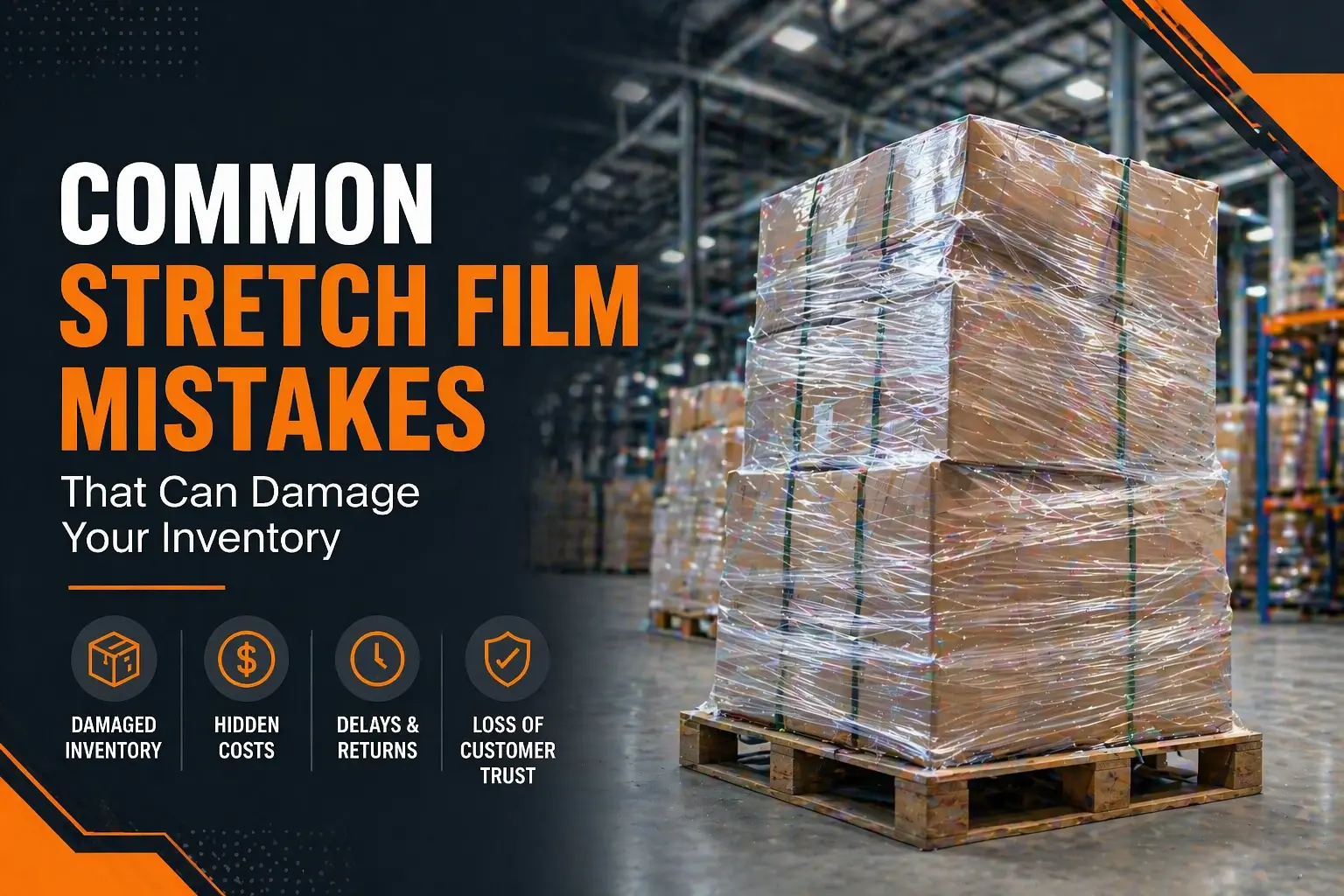
Most people treat stretch film like a basic task. Wrap the pallet, send it out, move on. In reality, this is where a lot of damage actually starts.
In warehouses and transport, small mistakes in stretch wrapping don’t stay small. Loads shift, cartons crush, and suddenly you are dealing with returns, complaints, and wasted time.
The good news is simple. These problems are not random. They come from how the film is used, and that means they can be fixed.
Why Stretch Film Matters More Than You Think
Stretch film is what holds your entire load together once it leaves the floor. Forklifts move it. Trucks shake it. Sometimes it gets restacked or handled multiple times.
If the wrapping is done right, the load stays tight and stable. If not, things start moving. And once movement starts, damage follows.
That is why stretch wrapping is not just a packing step. It is a load control step.
1. Using the Wrong Stretch Film
This is where most operations go wrong early.
Teams often use whatever film is available without thinking about how many pallets they wrap or how they wrap them. Over time, that creates inconsistency and weak load holding.
Hand film works fine for smaller jobs. But once volume increases, machine film gives better consistency and saves effort. Mixing them without a plan usually leads to uneven results.
2. Wrapping Too Loosely
Loose wrapping looks fine at first. The pallet stands straight, nothing seems wrong, and it moves out.
The problem shows up later. During transport, even slight vibration causes the load to shift. Boxes start leaning, pressure builds unevenly, and damage happens before delivery.
If this keeps happening, your wrapping setup needs fixing. Custompack delivers the right hand and machine grade stretch film for your operation, so you get consistent load security without wasting time or material.
3. Pulling the Film Too Tight
On the other side, some teams pull the film as hard as possible thinking tighter means safer.
It does not work that way. When you overstretch, the film loses strength. It looks tight, but it cannot hold the load properly during movement.
It can also crush cartons, especially lighter packaging. The aim is controlled tension, not maximum force.
4. Ignoring the Base of the Pallet
If the base is not locked properly, the rest of the wrapping does not matter much.
Many people start wrapping halfway up or rush through the bottom. That creates a weak foundation. Once the pallet moves, the entire load can shift from below.
A strong base wrap is what keeps everything stable during lifting and transport.
5. No Consistent Wrapping Method
Different people wrap differently. That is normal, but it creates problems.
One pallet is tight and secure. The next one is loose. The third one is overwrapped. This inconsistency leads to unpredictable results.
Having a simple, repeatable method fixes most of this.
A reliable approach usually includes:
- Wrapping the base 2 to 3 times
- Keeping overlap consistent between layers
- Maintaining steady tension while moving upward
- Securing the top before finishing
6. Treating Every Load the Same
Not all pallets behave the same.
Heavy loads need stronger containment. Fragile goods need support without too much pressure. If you use the same film and method for everything, you will either under-secure or damage the load.
Small adjustments based on weight and product type make a big difference.
7. Using Low-Quality Film
Cheap film feels like a saving at first. But it usually creates more work.
It tears more easily, loses tension faster, and needs more layers to do the same job. That means more time, more material, and more chances of failure.
Better film stretches properly and holds the load with fewer wraps. That is where the real saving happens
8. No Proper Training
Wrapping is often treated as a basic task that anyone can pick up.
In reality, small technique differences change the outcome. Without guidance, people develop their own methods, and those methods are not always effective.
A short training session can fix most of the common mistakes and bring consistency across the team.
9. Skipping Edge Protection
Some loads have sharp edges or uneven shapes. When film runs over those points, it can tear or weaken.
Once the film is compromised, the load starts losing stability. This is especially common with stacked cartons or irregular goods.
Using edge protectors keeps the film intact and improves load strength.
10. Ignoring Environment and Handling Conditions
Stretch film does not behave the same in every condition.
Cold can make it stiff. Heat can affect how it holds tension. Long transport times can also loosen poorly wrapped loads.
If your pallets go through different environments, your wrapping approach needs to account for that.
Signs Your Stretch Wrapping Is Not Working
You do not need reports to spot the issue. The signs are usually visible:
- Pallets leaning after transport
- Film coming loose on arrival
- Crushed cartons at the bottom
- Repeated damage complaints
If you see these often, the process needs adjustment.
Final Thoughts
Stretch film is not just something you use to finish a pallet. It is what holds the entire load together once it leaves your control.
When wrapping is done properly, everything moves smoothly. When it is not, problems show up quickly and cost more than expected.
Fixing a few small habits in how you wrap can remove most of these issues completely.
FAQs
1. What usually causes stretch film to fail?
In most cases, it is poor application. Loose wrapping, too much tension, or weak base wrapping are the main reasons loads become unstable.
2. How tight should stretch film be?
It should hold the load firmly without crushing it. The goal is steady, controlled tension, not pulling the film as hard as possible.
3. Is machine stretch film better than hand film?
For higher volumes, yes. Machine film gives more consistent results and saves time. Hand film works fine for smaller operations.
4. Can bad stretch wrapping increase costs?
Yes. It leads to damaged goods, extra labour, more material use, and return handling. Fixing the process usually reduces all of these.
5. How many wraps does a pallet need?
It depends on the load, but most pallets need a strong base wrap, consistent overlap through the middle, and extra support at the top.
6. What is the easiest way to reduce pallet damage?
Use the right film, follow a consistent wrapping method, and make sure the base is secured properly before moving the pallet.