
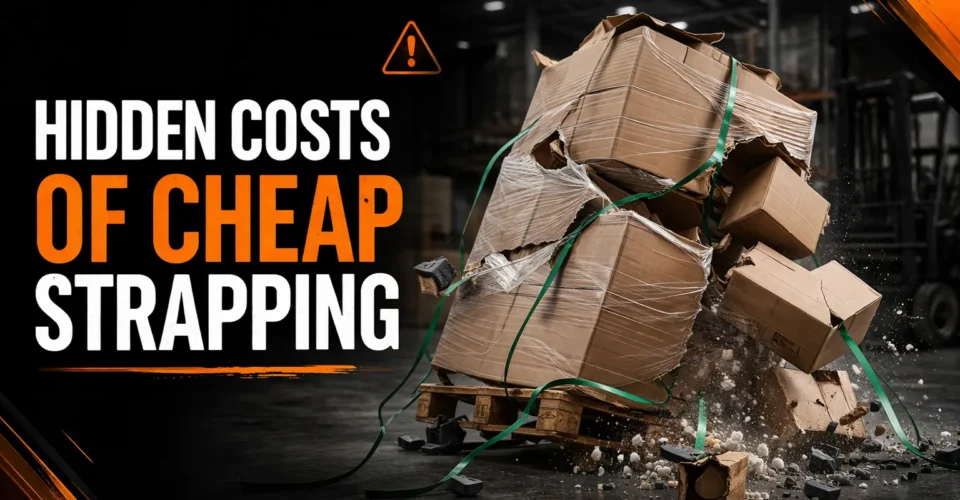
Cheap strapping feels like a smart move when you’re looking at numbers on a screen. Lower cost per roll, easy bulk buying, and no major change in your packing process. Most teams don’t question it because, at first glance, it does the job and keeps expenses down.
But the problem is, strapping is not just a cost item. It directly affects how your load behaves once it leaves your warehouse. When it fails, the impact doesn’t show up immediately. It shows up later, in ways that feel disconnected at first. A damaged pallet here, a delay there, a bit more time spent packing than usual. Slowly, it starts adding up.
The Real Cost of Cheap Strapping in New Zealand
In a controlled warehouse setting, almost any strapping can look reliable. Loads are stable, nothing is moving, and everything appears secure. The real test begins once the pallet is lifted, shifted, stacked, and sent across different locations.
For businesses working across New Zealand, transport is rarely simple. Goods travel long distances, often through multiple stops. Each movement puts stress on the load. That’s where weaker strapping starts showing its limits.
It doesn’t always snap instantly. Sometimes it just loosens slightly. That small shift is enough to create imbalance, and from there, things get worse during the journey. By the time it reaches the customer, the issue is already visible.
Why Cheap Strapping Struggles in Real Conditions
The main job of strapping is simple. Hold tension and keep the load stable. The issue with cheaper options is not that they don’t work at all, it’s that they don’t hold consistently.
They stretch more than expected. Once stretched, they don’t return properly. So even if the strap felt tight during packing, it gradually loses that grip. This is more noticeable on heavier pallets or loads that are not perfectly balanced.
You might not see the failure inside the warehouse. But once the pallet moves, that lost tension becomes a problem. Loads begin to shift, edges take pressure, and eventually something gives.
The Labour Impact Most Teams Ignore
This part is rarely tracked, but it’s always there.
When strapping feels unreliable, your team adapts without thinking about it. They pull tighter. Add one more strap. Double-check before sending it out. These are small actions, but they repeat across every pallet.
Over time, packing slows down. Not drastically, but enough to affect output. It becomes part of the routine, so no one flags it as a problem. But if you step back and look at the process, it’s clear something is off.
More Material Doesn’t Mean More Security
There is a common assumption that using more strapping makes the load safer. In reality, it usually points to the opposite problem.
When the base material isn’t strong enough, people compensate by adding more. Extra straps, tighter pulls, sometimes even combining different methods just to be safe. It works in the moment, but it’s inefficient.
You end up using more material, spending more time, and still not getting consistent results. A stronger strap often does the same job with less effort. That’s where the real efficiency comes in.
Where the Real Loss Happens: Product Damage
Damage during transit is not always dramatic. Sometimes it’s just slightly crushed cartons or shifted goods. But even small damage creates issues, especially when it reaches the customer.
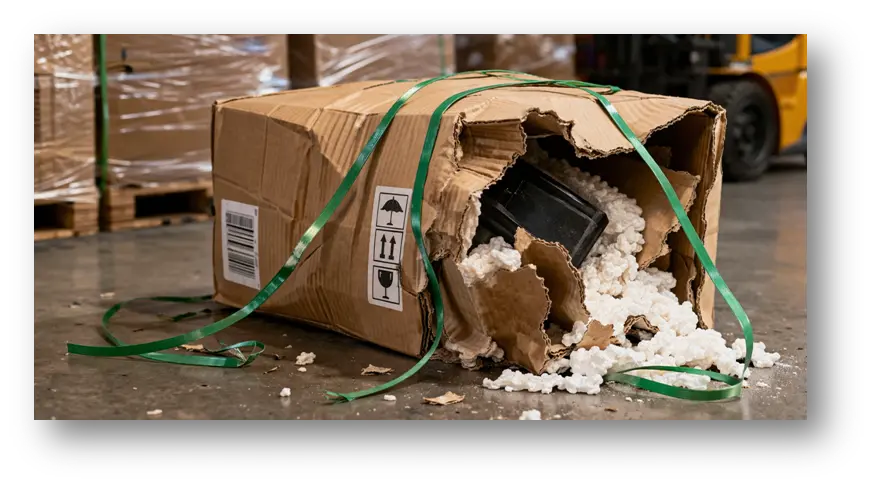
Once a load loses stability, everything inside becomes vulnerable. Pressure builds in the wrong places, items move, and packaging fails. In some cases, the entire pallet collapses.
The financial loss is one part. The bigger issue is reliability. If customers start expecting problems, it affects how they see your business.
Cheap Strapping vs Reliable PET Strapping
The difference is not just strength. It’s consistency.
With low-grade strapping, you are never fully sure how it will behave. Some loads hold fine, others don’t. That unpredictability makes it hard to standardise your process.
With better quality options, performance becomes predictable. For example, a plastic strapping roll is commonly used for regular loads because it holds tension well and works consistently across different conditions.
When loads become heavier or transport gets more demanding, premium strapping offers more stability. It handles pressure better and reduces the chance of failure during movement. Many businesses only switch after facing repeated issues, but once they do, the difference is noticeable.
When Cheap Strapping Still Works
To be fair, cheap strapping is not always the wrong choice.
If you are dealing with light loads, short movements, or internal transfers, it can be enough. In these situations, the load is not under much stress, so the risk is lower.
The problem starts when those same materials are used for heavier or long-distance shipments. That’s when the limitations show up, usually at the worst possible time.
Choosing the Right Approach
Most businesses start by looking at price. It makes sense. But over time, it becomes clear that price alone does not define cost.
A better approach is to look at how your loads behave after dispatch. Are they stable? Is your team constantly adjusting things? Are you using more material than expected? In many cases, switching to reliable polyester strapping helps improve consistency and reduces the need for constant adjustments.
If the answer to any of these is yes, then the issue is not random. It’s usually the strapping.
Why More NZ Businesses Are Rethinking Their Packaging
Across New Zealand, there is a clear shift happening. Businesses are focusing more on consistency rather than just cost.
They want packaging that works the same way every time. No guesswork, no constant adjustments, no surprises after delivery. Cheap strapping doesn’t support that. It creates variation.
Better materials bring control back into the process. That’s why more teams are moving towards structured solutions instead of relying on trial and error.
Final Thought
Cheap strapping can save money at the start, but it rarely stays that way. The real cost shows up later, spread across time, effort, and damaged goods.
If your packaging process feels inconsistent or your team is always “fixing” things on the go, it’s worth taking a closer look. In many cases, a small change in material solves multiple problems at once.
Custom Pack works with businesses that want packaging to be simple, reliable, and predictable. No overthinking, just solutions that hold up when it actually matters.
FAQs
1. Why does strapping feel tight but still becomes loose later?
This usually happens because the material stretches under tension and does not recover properly. It feels secure at first, but loses grip as the load moves.
2. What causes pallets to become unstable during transport?
Unstable loads are often the result of uneven weight combined with strapping that cannot maintain tension. Once movement starts, the problem grows quickly.
3. Is using more straps a good way to fix weak packaging?
Not really. Adding more straps can reduce risk slightly, but it does not solve the core issue. Stronger, more reliable material is usually a better solution.
4. Why does packing take longer even when the process hasn’t changed?
When materials are inconsistent, workers naturally take extra time to secure the load properly. These small delays build up across daily operations.
5. How can I make my packaging more consistent?
Consistency comes from using materials that perform the same way every time. When the strapping holds properly, your team can follow a standard method without constant adjustments.
6. When should I consider upgrading my strapping?
If you are seeing repeated issues like loose loads, extra material usage, or frequent adjustments, it’s a strong sign that your current setup needs improvement.