
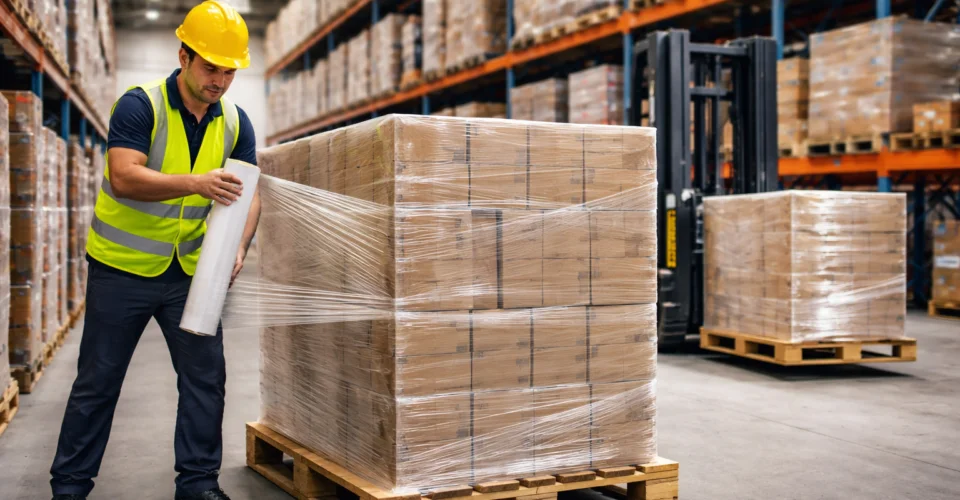
A loose pallet doesn’t announce itself. It waits until your forklift driver is halfway across the floor or until your freight arrives at a customer’s door looking like it lost a fight with the motorway. By then, the cost isn’t just the damaged stock. It’s the phone call, the replacement, and the quiet erosion of a relationship you worked hard to build.
For warehouses across New Zealand, small inefficiencies like this quietly drain time, money, and morale every single day. The solution is usually more straightforward than most businesses assume. The right stretch film, applied correctly, can transform how your warehouse runs. Here’s what that actually looks like in practice.
What Stretch Film Actually Does (Beyond the Obvious)
Most people know stretch film holds pallets together. But that’s only part of the story.
Good stretch film does three things at once: it stabilises your load, protects your product, and speeds up your wrap process. When all three work together, your team moves faster, your goods arrive intact, and your costs drop.
It’s a bit like good tyres on a truck. You don’t notice them when they’re working. But the moment they let you down, everything stops.
Faster Wrapping Means More Pallets Per Shift
Manual wrapping takes time. Walking around a pallet repeatedly, managing film tension by hand, and applying enough layers to actually secure the load. It adds up fast.
Machine stretch film changes that equation entirely. A semi-automatic or fully automatic pallet wrapper can wrap a pallet in under a minute. For a busy warehouse dispatching dozens of pallets a day, that’s a significant chunk of labour time returned to your team.
And it’s not just speed. Machine-applied film is consistent. Every pallet gets the same tension, the same number of wraps, the same coverage. There’s no guesswork, and no variation depending on who’s doing the wrapping. For warehouses managing high volumes, consistency is everything.
Less Film Waste, Lower Costs
Here’s something many warehouse managers overlook: using the wrong film often costs more than using better film.
Thin, low-quality film tears easily. Your team compensates by applying more layers. More film gets wasted, more time gets spent, and pallets still aren’t as secure as they should be.
Higher-performance stretch film, particularly pre-stretched film, uses significantly less material per pallet. It’s engineered to deliver more wraps per roll at the right tension. The result: fewer roll changes, less downtime, and a lower cost per pallet wrapped.
The upfront price per roll might look higher. But the cost per pallet wrapped is often lower. That’s the number that matters.
Load Stability Reduces Product Damage
Damaged goods are expensive. Replacing stock, processing claims, and managing unhappy customers all eat into your margins.
Most in-transit damage comes down to one thing: the load moved when it shouldn’t have. Boxes shifted, layers slipped, or the whole pallet arrived looking like it had an argument with the truck.
The right stretch film holds your load as a single, unified unit. It distributes pressure evenly across the pallet, resists the jolts and vibrations of road transport, and keeps everything exactly where you packed it.
For businesses shipping fragile goods, chilled product, or high-value stock, this isn’t a small thing. It’s the difference between a clean delivery and a phone call you don’t want to make.
Stretch Film and Workplace Safety
A loose pallet isn’t just a product risk. It’s a safety risk. Poorly wrapped loads can topple during storage or handling. That creates real danger for your team. In a busy warehouse environment, a shifting pallet can cause injury in seconds.
Stretch film that’s applied correctly keeps loads contained and stable. It reduces the chance of a collapse during forklift movement, racking, or transport.
Some operations also use coloured stretch film to create visual identification systems. Different colours for different product lines, dispatch zones, or priority orders. It’s a simple layer of organisation that helps your team work faster and with fewer errors.
Choosing the Right Film for Your Operation
Not all stretch film is the same. Picking the right type for your operation matters more than most people realise.
A few things to consider:
- Load weight and height. Heavier, taller loads need a thicker gauge film with higher puncture resistance.
- Manual vs machine application. Machine grade stretch film and hand grade stretch film have different stretch properties. Using the wrong one wastes material and compromises load security.
- Storage environment. If your product is stored outdoors or in UV-exposed areas, UV-stabilised film keeps loads protected for longer.
- Wrap pattern. The number of wraps at the base and top of a pallet matters as much as the film itself. A good wrap pattern locks the load to the pallet and prevents the top layers from sliding.
Getting this right doesn’t require an engineering degree. It just requires talking to someone who knows the product well and asking the right questions.
The Cumulative Effect on Warehouse Efficiency
Every small improvement compounds. That’s the real story with stretch film.
Faster wrapping frees up labour. Less film waste reduces consumable costs. Better load stability reduces damage claims. Safer pallets reduce incidents. Colour coding reduces picking errors.
None of these gains are dramatic on their own. But across a full week of dispatches, they add up to a warehouse that runs noticeably better.
For New Zealand businesses operating in competitive freight, manufacturing, or horticulture environments, that edge matters. Margins are tight. Every improvement counts.
Getting the Most From Your Stretch Film
A few practical habits make a real difference:
- Don’t over-stretch by hand. It weakens the film and reduces holding force. Let the film do the work.
- Start at the base. Always anchor the film to the pallet itself before wrapping upward. This locks the load down and prevents shifting.
- Overlap each layer. A 50% overlap gives you consistent coverage without wasting film.
- Check roll cores. Damaged cores cause uneven tension and film breaks. A small check before each shift saves frustration later.
These aren’t complicated. But they’re the kind of thing that separates a well-run operation from one that’s constantly troubleshooting.
Ready to Improve How Your Warehouse Runs?
Custompack supplies stretch film solutions to warehouses, manufacturers, and logistics operations across New Zealand. Whether you’re wrapping by hand or running an automated line, we’ll help you find the right film for your operation.
Browse our stretch film range at custompack.co.nz or get in touch with our team for a no-pressure conversation about what works best for you.
Frequently Asked Questions
Q-1. What is stretch film used for in a warehouse?
Stretch film wraps and secures pallets, keeping loads stable during storage and transport. It protects products from dust, moisture, and movement.
Q-2. How does stretch film improve warehouse efficiency?
It speeds up wrapping, reduces product damage, and cuts film waste. Together, these save time and lower costs across your daily dispatch process.
Q-3. How does hand stretch film compare to machine stretch film?
Hand film is designed for manual wrapping. Machine film suits automated wrappers. Using the wrong type reduces efficiency and wastes material.
Q-4. How much stretch film should I use per pallet?
It depends on load weight and height. A standard pallet typically needs 3–5 wraps at the base and top, with full coverage across the middle layers.
Q-5. Can stretch film reduce product damage during transport?
Yes. Properly applied stretch film holds the load as one unit, preventing shifting and reducing the in-transit damage that leads to costly replacements or claims.
Q-6. Is pre-stretched film better than standard stretch film?
Pre-stretched film uses less material per pallet and reduces hand fatigue. It suits high-volume operations looking to cut consumable costs without sacrificing load security.
Q-7. Does stretch film work in cold storage environments?
Yes. Most standard stretch films perform well in chilled environments. For freezer storage, check that the film is rated for low-temperature use before purchasing.