
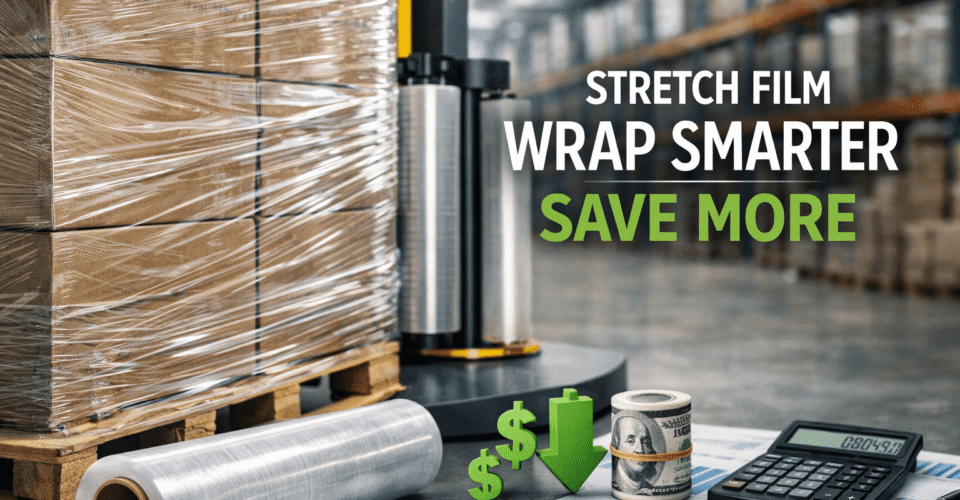
You order a new pallet of stretch film. Three weeks later, it’s gone. The loads look the same. The team hasn’t changed. But the film keeps disappearing faster than your budget can keep up.
Sound familiar? Stretch film is one of those consumables that flies under the radar until the cost becomes impossible to ignore. Most businesses are using more than they need. And the fix rarely involves spending more money. It involves using what you have more smartly. These are five approaches that deliver real results.
1. Stop Using One Film for Every Job
This is the most common mistake in packaging operations. One roll of film. Every pallet. Every load. Every time.
The problem is that loads are not equal. A pallet of light cardboard boxes needs a different containment force than a stack of heavy timber or agricultural bales. Using the same gauge film for everything means you’re almost certainly overwrapping light loads and potentially underwrapping heavy ones.
Match the film to the load. Here’s a straightforward way to look at it:
- Light loads (boxes, retail goods, soft goods): a thinner, lower-gauge film does the job without waste.
- Heavy or irregular loads (machinery parts, construction materials, and dense products): a thicker film gives you the containment force you need.
- Tall or unstable loads: focus on overlap consistency, not just film thickness.
When you right-size your film to your load type, you stop wasting material on loads that don’t need it.
2. Pre-Stretch Percentage Is Costing You More Than You Think
Pre-stretch is how much the film is stretched before it’s applied to a pallet. This is where a huge amount of film waste hides.
Most modern stretch film is designed to be pre-stretched somewhere between 150% and 300%. That means one metre of film can cover two to four metres of pallet surface before it even touches the load. If your equipment isn’t set up to take advantage of that, you’re essentially applying film at a fraction of its potential coverage.
Think of it like this: if you’re only stretching your film to 100% when it could safely reach 250%, you’re using 2.5 times more film than necessary. Per pallet. Every day.
Check your machine settings. If you’re wrapping manually, ask whether the application technique your team uses is actually stretching the film or just wrapping it loosely around the load.
Small adjustments here create noticeable savings fast.
3. Switch to Machine Application Where Volume Justifies It
Hand wrapping is fine at low volumes. But it introduces something that kills cost efficiency: inconsistency.
Different operators apply different tension. Some walk faster. Some overlap more than others. Some apply an extra layer on every load out of habit. Over a week, across a full team, those small differences add up to a significant amount of wasted film.
This is where machine grade stretch film makes a real difference. It’s engineered to work with powered wrapping machines, which deliver consistent tension, consistent pre-stretch, and consistent overlap on every single pallet. No guesswork. No variation between shifts.
For businesses wrapping more than 15 to 20 pallets per day, the switch to machine grade stretch film and powered application typically pays for itself through reduced film consumption alone. Add in the time saved per pallet and the reduction in product damage claims, and the case becomes even stronger.
If you’re not sure whether your volume justifies the switch, talk to your supplier. A good one will give you an honest answer rather than just push a sale.
4. Audit Your Wrapping Cycle
When did you last watch someone wrap a pallet from start to finish?
Most operational managers set the standard once and assume it sticks. But wrapping habits drift. Operators add extra rotations “just to be safe.” Film gets pulled too loosely. The base wrap gets skipped. None of it gets flagged because the pallet still looks secure when it leaves the floor.
Run a quick audit. Time a few wrapping cycles. Count the number of film rotations per pallet. Compare loads wrapped by different operators side by side.
You’re looking for:
- Unnecessary overlap: more than 50% overlap on straightforward loads is usually wasteful.
- Extra rotations: one or two additional passes per load doesn’t sound like much. Across 50 pallets a day, it adds up to a meaningful amount of wasted film.
- Inconsistent base wrapping: the base wrap anchors the film to the pallet. If it’s done poorly, operators compensate by adding extra layers on top.
Setting a clear, written wrapping standard and training your team on it is one of the cheapest improvements you can make. No new equipment. No new product. Just consistency.
5. Reduce Damage Claims and Repackaging Costs
Here’s the angle most people miss. Cutting packaging costs isn’t just about using less film. It’s also about using it correctly enough that loads arrive intact.
Product damage during transit is one of the most expensive hidden costs in a logistics or warehousing operation. When a load shifts, tips, or arrives damaged, you’re not just looking at the cost of the goods. You’re looking at repackaging time, replacement freight, customer relationship damage, and in some cases, insurance claims.
Under-wrapping to save on film is a false economy. The goal is efficient wrapping, not minimal wrapping. There’s a difference.
A properly wrapped pallet uses the right gauge film, applied with the right tension, in the right number of passes for that specific load type. It doesn’t use more film than it needs. But it doesn’t cut corners either.
If your damage rate is climbing while your film usage is dropping, that’s a sign that your team has overcorrected. Pull it back to the standard.
Conclusion
Stretch film costs are manageable. They don’t require a complete overhaul of your operation or a significant capital investment. Most of the savings come from small, deliberate changes: better film-to-load matching, smarter pre-stretch settings, consistent application, and the occasional honest look at how your team actually wraps.
Start with one strategy. Measure it. Move to the next.
The businesses that get packaging costs under control aren’t doing anything complicated. They’re just paying attention to the details most others ignore.
If you’re ready to review your stretch film setup or want advice on the right film for your operation, the team at Custompack is happy to help. No pressure, no upsell: just practical guidance from people who know packaging.
Get in touch with Custompack today at custompack.co.nz